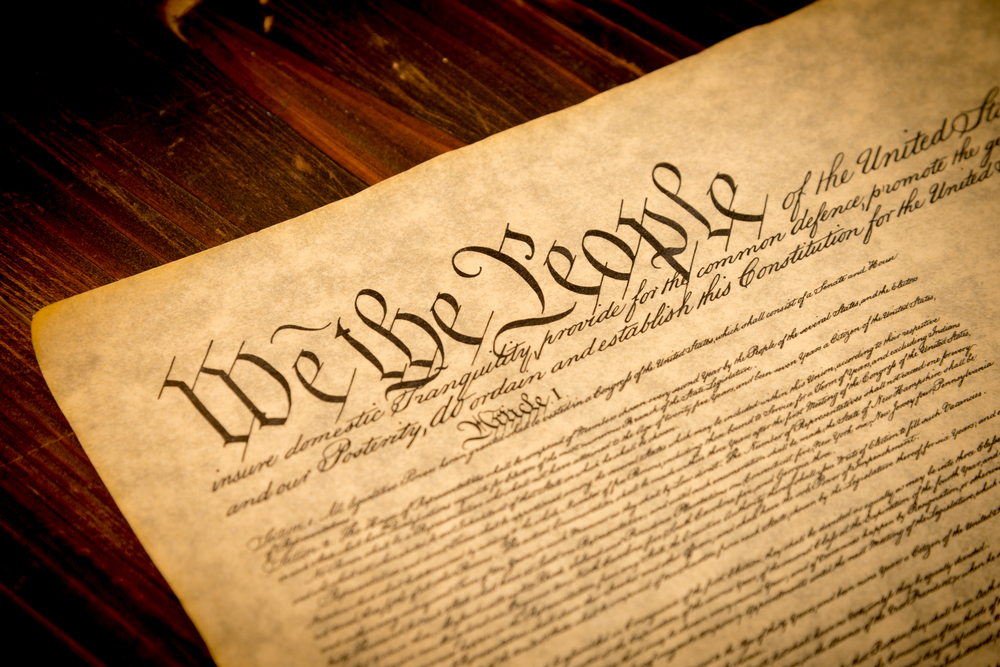
Know Your Rights: 1st, 2nd, 5th, 7th, 8th, 9th and 10th Amendments
First Amendment — Free Speech, Religion, Press, Assembly & Petition
- What the First Amendment actually says — and why reading the exact text matters before analyzing any case
- Why the First Amendment only restricts government action and not private schools, employers, or social media platforms
- What “abridging” free speech means and why the threshold for government interference is intentionally high
- How the Supreme Court’s “categorical approach” identifies types of speech that receive no First Amendment protection at all
- Why true threats, incitement to imminent lawless action, and fighting words fall outside First Amendment protection
- What the “substantial disruption” test is and how it determines when schools can legally punish student speech
- How Tinker v. Des Moines established that students do not shed their constitutional rights at the schoolhouse gate
- What Bethel School District v. Fraser and Morse v. Frederick added to the limits on student speech rights
- How off-campus speech — including social media posts made from home — is treated differently from on-campus speech
- What the Supreme Court decided in Mahanoy Area School District v. B.L. about a student’s off-campus Snapchat post
- Why symbolic speech — armbands, flags, burning the flag — receives the same First Amendment protection as spoken words
- What prior restraint is, why courts treat it as the most serious First Amendment violation, and when it is ever permitted
- Why some categories of speech — obscenity, defamation, true threats — receive reduced or no constitutional protection
- What freedom of the press means for professional journalists and what it means for student journalists specifically
- How Hazelwood School District v. Kuhlmeier gave schools significant control over school-sponsored student newspapers
- What the Establishment Clause prohibits — government actions that establish, endorse, or promote religion
- What the Free Exercise Clause protects — the right to hold religious beliefs and in most cases to act on them
- Why the line between the Establishment Clause and the Free Exercise Clause is one of the most litigated areas in all of constitutional law
- What Engel v. Vitale decided about school-sponsored prayer and why that ruling still generates controversy
- Why student-led, student-initiated prayer is constitutionally protected while teacher-led or school-sponsored prayer is not
- How Kennedy v. Bremerton School District changed the legal landscape for public school employees and religious expression
- What the right to peaceful assembly protects — gathering, marching, and demonstrating in public spaces
- What a “time, place, and manner” restriction is and why such restrictions can be constitutional even when they limit speech
- Why a permit requirement for a public protest can be constitutional in some circumstances and unconstitutional in others
- What the right to petition the government means — from formal legal petitions to contacting elected officials
- How the petition clause connects to the broader right to participate in democratic governance
- Why counter-protests are constitutionally protected and what the government can and cannot do to separate opposing groups
Second Amendment — The Right to Bear Arms
- What the Second Amendment actually says — and why every word in a 27-word sentence matters
- What “well regulated militia” meant in 1791 and how that original meaning shapes modern legal debates
- The difference between the collective rights interpretation and the individual rights interpretation
- What District of Columbia v. Heller decided and what it deliberately left unanswered
- What McDonald v. City of Chicago added by applying the Second Amendment to state and local governments
- What New York State Rifle & Pistol Association v. Bruen changed about how courts evaluate gun regulations
- What the “historical tradition” test requires and why it replaced the previous two-part interest balancing test
- Which categories of people are prohibited from owning firearms under federal law and why
- Why the minimum age to purchase a handgun from a licensed dealer is 21 but the minimum age to receive one as a gift differs
- What the law says specifically about minors possessing firearms — and how state laws vary dramatically
- Where firearms are prohibited by federal law regardless of state law — schools, federal buildings, and beyond
- What the Gun-Free School Zones Act prohibits and what the Supreme Court initially said about it in United States v. Lopez
- What open carry means, which states allow it, and what constitutional protection it receives
- What concealed carry means and how Bruen changed the legal standard states must meet to restrict it
- What red flag laws are, how they work procedurally, and the constitutional due process objections raised against them
- How the Second Amendment interacts with domestic violence convictions and restraining orders
- What “sensitive places” doctrine allows governments to prohibit firearms even after Bruen expanded gun rights
- Why the Second Amendment applies to the federal government and the states but not to private property owners
- What bump stocks, suppressors, and short-barreled rifles are and how federal law treats them differently from standard firearms
- How state assault weapons bans have survived — or failed — constitutional challenge after Bruen
- What the difference is between a felony and a misdemeanor conviction in terms of Second Amendment rights
- Whether convicted felons can ever have their Second Amendment rights restored and under what process
- Why the Second Amendment debate involves three separate conversations — constitutional law, federal statute, and state law — that are easy to confuse
Fifth Amendment — Due Process & Takings Clause
- What the Fifth Amendment actually says and which of its protections are most relevant to everyday life
- What procedural due process requires — notice, a hearing, and a neutral decision-maker — before the government takes something from you
- What substantive due process protects — rights so fundamental that the government cannot take them regardless of what procedures it follows
- Why due process appears in both the Fifth and Fourteenth Amendments and what the difference is
- What it means for a public school to violate a student’s due process rights in a suspension or expulsion proceeding
- What Goss v. Lopez decided about the minimum due process a student is entitled to before being suspended
- What the Takings Clause says and the two conditions it places on government seizure of private property
- What eminent domain is, where the power comes from, and how it is exercised in practice
- What “public use” means — roads, schools, and military bases — versus what it has been stretched to include
- What Kelo v. City of New London decided, why it provoked a national backlash, and what legislative responses followed
- What “just compensation” means and how disputes over the value of taken property are resolved
- What a regulatory taking is — when a government regulation restricts property use so severely it functions as a physical taking
- What Penn Central Transportation Co. v. New York City established as the balancing test for regulatory takings
- What Lucas v. South Carolina Coastal Council decided about regulations that eliminate all economic value from property
- What civil asset forfeiture is — law enforcement seizing property connected to alleged criminal activity without a conviction
- How civil asset forfeiture differs from criminal asset forfeiture and why the distinction matters for due process
- What reforms states have passed to limit civil asset forfeiture and what the federal program still allows
Seventh Amendment — Civil Jury Trials
- What the Seventh Amendment says and why it applies only to federal courts and not automatically to state courts
- What the difference is between a civil case and a criminal case — parties, burden of proof, and consequences
- Why the founders considered the civil jury trial a fundamental safeguard against both government overreach and judicial corruption
- What “suits at common law” means and how courts determine which civil claims trigger the Seventh Amendment right
- Why the $20 threshold written into the Seventh Amendment reflects 1791 monetary values and what it means in modern terms
- What a bench trial is and what it means when both parties waive their right to a jury
- How civil juries are selected, how many jurors are required, and what unanimity rules apply
- What the difference is between a general verdict and a special verdict in a civil case
- What compensatory damages are and how a jury calculates what a plaintiff has actually lost
- What punitive damages are, when they are awarded, and whether the Constitution limits how large they can be
- What nominal damages are and why a plaintiff might win a civil case but receive only one dollar
- What the standard of proof in a civil case is — preponderance of the evidence — and how it differs from the criminal standard
- Whether a minor can sue or be sued in civil court and what procedural differences apply
- What a guardian ad litem is and why minors typically need one to participate in civil litigation
- What mandatory arbitration is and how it differs from a voluntary agreement to arbitrate after a dispute arises
- How arbitration clauses in consumer contracts, employment agreements, and app terms of service eliminate jury trial rights before any dispute exists
- What the Federal Arbitration Act does and why the Supreme Court has interpreted it to broadly enforce arbitration agreements
- What class action waivers in arbitration clauses do and why they matter for disputes involving small individual losses
- Whether arbitration clauses in contracts signed by or on behalf of minors are enforceable
- What the Seventh Amendment does not cover — equity cases, administrative proceedings, and family court matters
Eighth Amendment — Cruel & Unusual Punishment
- What the Eighth Amendment says and where the phrase “cruel and unusual punishment” originally came from
- What the three separate protections of the Eighth Amendment are — excessive bail, excessive fines, and cruel and unusual punishment
- What the “evolving standards of decency” test is and why the Supreme Court ties constitutional meaning to shifting social consensus
- How the Court measures evolving standards — legislative trends, jury behavior, and its own independent judgment
- What Furman v. Georgia decided about the death penalty in 1972 and why it did not abolish capital punishment outright
- What Gregg v. Georgia established four years later and how it revived the constitutionality of capital punishment
- What Atkins v. Virginia decided about executing people with intellectual disabilities
- What Roper v. Simmons decided in 2005 about executing individuals for crimes committed before age 18
- Why the Court in Roper found that international consensus and scientific evidence about adolescent brain development were constitutionally relevant
- What Graham v. Florida decided about life without parole for juvenile offenders convicted of non-homicide offenses
- What Miller v. Alabama decided about mandatory life without parole sentences for juvenile homicide offenders
- What Montgomery v. Louisiana added by making Miller retroactive — meaning people already serving those sentences could seek resentencing
- What brain science says about adolescent decision-making and impulse control and why the Supreme Court found it legally significant
- What the proportionality principle requires — that punishment must be proportional to the severity of the offense
- What Solem v. Helm established as the three-factor test for evaluating whether a non-capital sentence is disproportionate
- What Harmelin v. Michigan and Ewing v. California said about lengthy sentences for non-violent offenses
- Whether solitary confinement constitutes cruel and unusual punishment and what courts have said specifically about its use on juveniles
- What the Eighth Amendment requires with respect to prison conditions — medical care, protection from violence, and basic human needs
- What excessive bail means and what factors courts consider when setting bail amounts
- What cash bail reform looks like as a constitutional matter and what arguments are made on both sides
- What excessive fines means after Timbs v. Indiana applied the Eighth Amendment’s fines clause to the states
- Why Timbs matters for civil asset forfeiture and whether fines and forfeitures can themselves be unconstitutional
- What “categorical” Eighth Amendment rules are — blanket prohibitions on certain punishments for certain classes of offenders — versus “as applied” challenges to individual sentences
- Why school corporal punishment is not covered by the Eighth Amendment and what Ingraham v. Wright decided
Ninth Amendment — Unenumerated Rights
- What the Ninth Amendment says in full and what problem it was written to solve
- Why James Madison included the Ninth Amendment and what objection to the Bill of Rights it was designed to answer
- What an “unenumerated right” is and why the distinction between listed and unlisted rights matters
- Why the Ninth Amendment is sometimes called the “forgotten amendment” and why courts have been reluctant to use it directly
- What Griswold v. Connecticut decided about the right to privacy and how the Court found it in the constitutional text
- What “penumbras” and “emanations” means in Justice Douglas’s Griswold opinion and why that reasoning has been criticized
- How different justices have used different amendments — including the Ninth — to locate the right to privacy
- What Eisenstadt v. Baird extended from Griswold and why the extension mattered
- What bodily autonomy means as a constitutional concept and where courts have located it in the text
- What the right to travel is, where it comes from constitutionally, and what restrictions on movement courts have struck down
- What parental rights are as a constitutional matter and what Pierce v. Society of Sisters and Meyer v. Nebraska established
- What the right to direct the education of your children means in the context of homeschooling and private schooling
- What originalism says about the Ninth Amendment — whether it supports or undermines an expansive reading of unenumerated rights
- What living constitutionalism says about the Ninth Amendment and how it justifies protecting rights the founders never specifically named
- Why the debate over unenumerated rights is ultimately a debate about who gets to identify them — courts, legislatures, or the people
- What the difference is between the Ninth Amendment and the Fourteenth Amendment’s Due Process Clause as sources of unenumerated rights
- Why the Ninth Amendment becomes especially important when new technologies create new privacy and autonomy questions the founders never anticipated
- What the relationship is between the Ninth Amendment and rights that were assumed so obvious they were never written down
Tenth Amendment — Reserved Powers & Federalism
- What the Tenth Amendment says and what the phrase “reserved to the states respectively or to the people” means
- What federalism is and why the United States operates as a union of sovereign states rather than a single unified legal system
- What “enumerated powers” are and why the limited list of federal powers in Article I is the foundation of the Tenth Amendment
- What the Necessary and Proper Clause does and why its broad interpretation has always been in tension with the Tenth Amendment
- What the Commerce Clause says and how the Supreme Court expanded its reach far beyond interstate trade during the New Deal era
- What United States v. Lopez decided in 1995 and why it was the first time in sixty years the Court struck down a federal law as exceeding Commerce Clause authority
- What United States v. Morrison added to the Lopez framework and what it says about the limits of federal power
- What nullification is — the idea that states can declare federal law void within their borders — and why federal courts have consistently rejected it
- What interposition is and how it differs from nullification
- What the Supremacy Clause says and why it means federal law wins when it directly conflicts with state law
- What preemption is and how courts determine whether federal law has displaced state law in a particular area
- What the anti-commandeering doctrine is and why the federal government cannot order state officials to enforce federal law
- What New York v. United States decided about the federal government directing state legislatures
- What Printz v. United States decided about the federal government ordering state executive officers to implement federal programs
- What Murphy v. National Collegiate Athletic Association added to the anti-commandeering doctrine
- What the Spending Clause allows the federal government to do — attach conditions to federal funding — and what limits NFIB v. Sebelius placed on that power
- Why marijuana can be legal under state law and simultaneously illegal under federal law without the state law being struck down
- What the “laboratories of democracy” metaphor means and which justice coined it
- Why education is primarily a state function and what the constitutional basis is for federal involvement in public schools
- What sanctuary city policies are and how the Tenth Amendment’s anti-commandeering doctrine protects them
- Why the Tenth Amendment’s practical force has been debated since the founding and what periods of history tested it most severely
- What the difference is between the Ninth Amendment and the Tenth Amendment — one reserves rights to the people, the other reserves powers to the states
- Why a teenager moving from one state to another may find that their legal rights on the same issues are dramatically different